
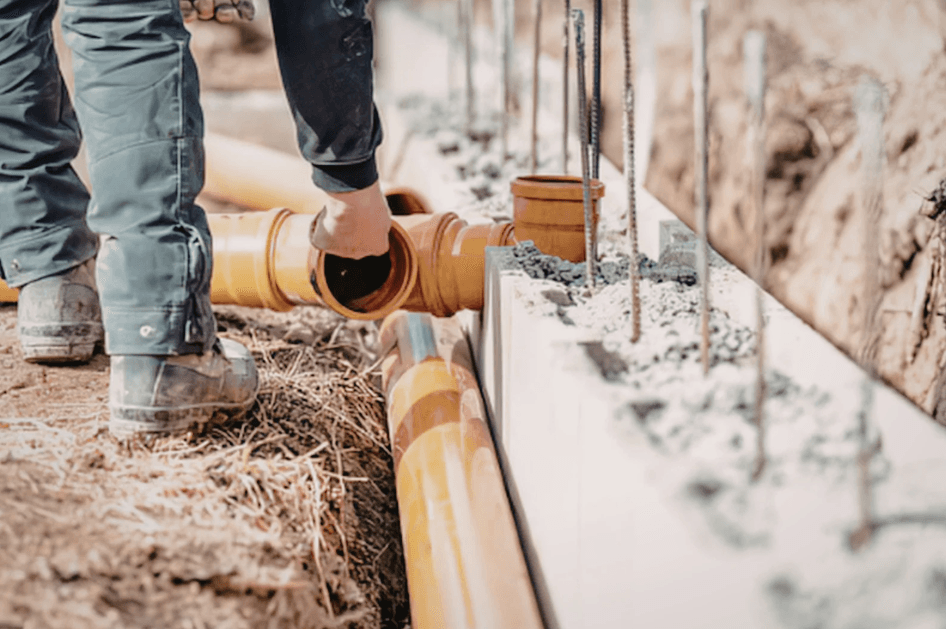
Urban developments place real pressure on how water moves through a site, and getting drainage wrong can stall planning, inflate costs, and create lasting problems for residents. Tight plots, ageing infrastructure, and stricter planning expectations mean surface water and foul water must be managed with care from the very first design stage. Learn more about drainage engineering services and how a considered approach can keep a scheme moving. If you would like to talk through a specific site, you can always get in touch with our team for practical advice.
This guide explains the most common urban drainage problems developers and design teams face, why they matter, and how good engineering helps solve them.
Why Drainage Is So Challenging in Urban Settings
Urban sites rarely offer the open space that makes drainage straightforward. Land is at a premium, surfaces are heavily paved, and rainfall that once soaked into the ground now runs straight off rooftops and hardstanding. This increases runoff volumes and speeds up how quickly water reaches drains and watercourses.
At the same time, planning authorities and Lead Local Flood Authorities expect developments to demonstrate that they will not worsen flood risk. The result is a balancing act between limited space, technical compliance, and buildability. Understanding the typical pinch points early helps avoid expensive surprises later.
Limited Space on Constrained Sites
Constrained urban sites are perhaps the single biggest drainage challenge. Many developments sit on brownfield land or infill plots where there is little room for traditional attenuation features such as ponds or large basins.
When space is scarce, engineers often turn to below-ground solutions like geocellular attenuation tanks, oversized pipes, or permeable paving. These approaches store and slow water without consuming valuable developable area. The skill lies in selecting a combination that meets discharge limits while remaining practical to build and maintain.
What Commonly Goes Wrong
Problems arise when drainage is treated as an afterthought once the layout is fixed. If there is no allocated space for storage or treatment, designers are forced into costly retrofits or awkward compromises. Brownfield development drainage can also be complicated by contamination, which restricts infiltration and limits the options available.
Existing Utilities and Public Sewers
Urban ground is congested. Beneath the surface sit gas, water, electricity, telecoms, and existing public sewers, all of which influence where new drainage can run. A proposed pipe route that looks simple on a plan may clash with services that are expensive or impossible to move.
Where a development needs to build close to or over a public sewer, a build-over agreement with the water authority is usually required. Where an existing sewer crosses the site and conflicts with the proposals, a sewer diversion under Section 185 may be necessary. Both involve careful design and negotiation to protect the existing infrastructure and avoid delays.
Balancing Surface Water and Foul Water Systems
Modern developments are expected to keep surface water and foul water separate. Foul water from toilets, kitchens, and bathrooms is directed to the public foul sewer or treatment works, while surface water from roofs and paving is managed through sustainable systems wherever possible.
Mixing the two, or connecting surface water to a foul system, can overload sewers and increase the risk of pollution and flooding. Designing clear, well-coordinated foul water connections and surface water routes is essential, and it is a frequent sticking point during technical approval.
| Challenge | Practical Solution |
| Limited space for attenuation | Below-ground storage, permeable paving, oversized pipes |
| Clashes with existing utilities | Careful route design, build-over agreements, sewer diversions |
| Mixing foul and surface water | Fully separate systems with clear connection design |
| Meeting planning requirements | Early drainage strategy and flood risk assessment |
| Risk of surface flooding | Exceedance flow routing and safe overland flow paths |
| Long-term performance | Maintainable SuDS and clear adoption arrangements |
Planning and Approval Complexity
A robust drainage strategy is now a core requirement for most planning applications. Authorities want clear evidence of how surface water and foul water will be managed, what discharge rates are proposed, and how flood risk will be controlled.
For larger sites, or those in flood-prone areas, a flood risk assessment is also expected. These documents reassure planners and statutory consultees that the scheme is viable and sustainable. Where drainage is to be adopted by the water authority, Section 104 technical approval brings its own standards, and connections to the public network are managed through Section 106 applications.
Each of these processes has the potential to delay a project if submissions are incomplete or fail to anticipate technical comments. Early, well-prepared drainage design for planning helps smooth validation and approval, which is exactly where experienced engineers add value. If you are weighing up the requirements for a particular scheme, our team is happy to discuss your project and explain what is likely to be needed.
SuDS Constraints in Dense Developments
Sustainable urban drainage systems, known as SuDS, aim to mimic natural drainage by slowing, storing, and treating runoff close to where rain falls. They reduce flood risk, improve water quality, and can support biodiversity. In dense urban schemes, however, the textbook features are not always achievable.
Swales, basins, and ponds need space and gentle gradients that simply may not exist. The challenge is to deliver the principles of SuDS within tight constraints, often by stacking measures together in a treatment train. Green roofs, permeable surfaces, rain gardens, and underground storage can combine to manage both water quantity and water quality treatment where surface space is limited.
Designing for Maintenance
A SuDS scheme is only successful if it can be maintained for the long term. Features that are difficult to access or clean will degrade and fail. Considering maintenance and adoption arrangements from the outset, including who will be responsible, helps ensure systems keep performing for years to come.
Flood Risk and Exceedance Flow Management
Even a well-designed system can be overwhelmed by an extreme storm. Good practice requires designers to think beyond the design event and plan for what happens when capacity is exceeded.
Exceedance flow routing identifies safe overland paths so that, in a severe storm, water flows away from buildings and towards areas where it can do least harm. Without this planning, surface flooding can damage property and endanger people. Allowing for climate change by adding the appropriate uplift to rainfall figures is now a standard and important part of urban flood risk management.
Pipe Sizing, Gradients, and Roof Drainage
The detail matters. Pipes that are too small, or laid at the wrong gradient, can cause blockages, surcharging, and standing water. Correct pipe sizing and gradients keep systems self-cleansing and reliable.
Roof drainage design is another area that is easily underestimated, particularly on large flat-roofed buildings. Sizing outlets correctly and providing adequate overflow provisions protects the structure and prevents water pooling where it should not. These technical decisions are where careful, coordinated engineering quietly prevents future problems.
Buildability and Coordination
A drainage design on paper is only useful if it can be built efficiently on a real site. Levels, connection points, and the sequence of construction all need to work alongside the structural and civil elements of the scheme.
Poor coordination between disciplines is a common cause of on-site delays and variations. Keeping drainage, civil, and structural design closely integrated, ideally within one team, reduces clashes and produces practical, buildable outcomes. This joined-up approach is one of the clearest ways to de-risk delivery and keep a programme on track.
The Importance of Early Drainage Strategy Input
Many urban drainage challenges become far easier to solve when drainage is considered early. Bringing a drainage engineer in at the concept stage means storage, treatment, and connection routes can shape the layout rather than fight against it.
Early input helps confirm discharge rates, identify constraints such as existing sewers, and prepare the strategy and flood risk evidence planners expect. It also avoids the costly redesign that occurs when drainage is squeezed in at the end. In short, early engagement protects both the programme and the budget.
How Experienced Drainage Engineers Help
Navigating constrained sites, statutory approvals, and technical standards is demanding, and the consequences of getting it wrong are significant. A chartered, director-led consultancy that carries out its own in-house drainage modelling can move quickly, respond to authority comments efficiently, and deliver designs that are compliant, cost-effective, and straightforward to build.
From SuDS and adoptable drainage design through to flood risk assessments, sewer connections, diversions, and bespoke solutions for difficult sites, the right partner turns a potential obstacle into a smooth part of the process. If you are planning an urban development and want practical, reliable drainage advice, you are welcome to contact our team to discuss how we can help.
Frequently Asked Questions
A drainage strategy is required for most planning applications. It sets out how surface water and foul water will be managed, the proposed discharge rates, and how flood risk will be controlled. Preparing it early helps avoid delays during validation and approval.
SuDS stands for sustainable urban drainage systems. These are features that slow, store, and treat rainfall close to where it lands, mimicking natural drainage. They help reduce flood risk, improve water quality, and can enhance biodiversity.
Not every scheme, but many do. A flood risk assessment is generally expected for developments in flood-prone areas or those above a certain size. It identifies potential flood risks and sets out suitable mitigation measures to satisfy planners and statutory consultees.
Yes. Accurate and compliant civil engineering designs for highways and drainage are often required to secure planning permission. Professional engineers ensure these designs meet all local authority standards, facilitating a smoother approval process.
As early as possible, ideally at the concept stage. Early involvement allows drainage to influence the layout, confirms discharge rates and constraints, and ensures the right strategy and evidence are in place. This reduces the risk of costly redesign later in the project.